At New Vic Theatre until Saturday 22 October
At the start of Alan Ayckbourn’s new play Family Album, two removal men lug furniture into an empty living room like extras in an Ealing comedy. At the end, they haul it out again like a pair of heavy metal roadies who moonlight as bouncers. The two scenes encapsulate the veteran playwright’s well-honed powers of social observation, brilliant craftsmanship, and wit.
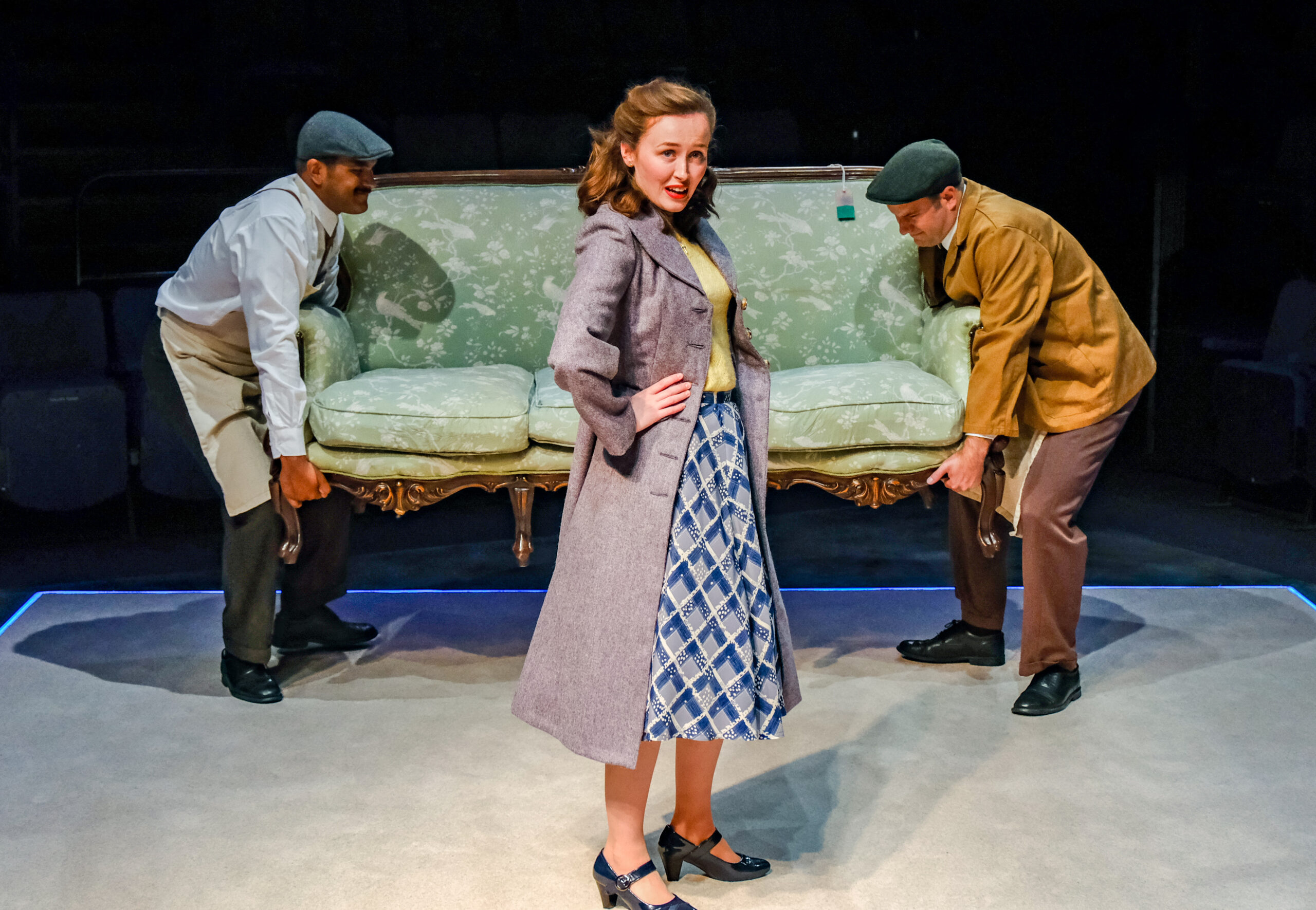
What Ayckbourn gives us in between is a story of three women – mother, daughter, and granddaughter – set in 1952, 1992 and 2022, and all played out in the same middle-class living room, not sequentially, sometimes even simultaneously.
A strip of continuous light outlining the shape of the room changes colour to show the time period of each scene, with white representing overlaps. It’s hardly necessary, as the language and mores of each epoch, let alone their phones, tell half the story.
Through the slow-build of the first half we take on trust that these scenes are connected, knowing that the attitudes and events we see in one scene will either shape or result from those in others.
The second half moves more briskly as the storytelling becomes explicit. It coalesces around dramatic events where disappointment and pain trump Ayckbourn’s customary humour. But with clarity it also brings a sense of progression.
The only major male role is the 1952 husband John, played with some swagger by Antony Eden. He shows superficial affection for his wife Peggy while controlling and verbally bullying her with a casualness that is both convincing and deeply shocking.

Georgia Burnell’s Peggy is bright-eyed and cheerful as she arranges the furniture “willy-nilly” having conveniently lost his “one-to-twenty scale drawing” of where it will all go. But her resilience manifests itself in fashioning yet another meal of spam fritters. When she sits John down to suggest that their very bright daughter Sandy could go to university, his blatantly sexist refusal leaves her muttering to herself “but he’s wrong” as she gives her precious sideboard another polish.
Sandy’s husband never appears on stage – or at the ten-year-old birthday party of their daughter Alison which is a pivotal event in 1992. By 2022 Alison doesn’t have a man remotely in the frame. She and her wife Jess are finally selling up and moving on.

It’s a credit to all the actors that they make a dramatic whole of Ayckbourn’s ambitious three-stories-in-one, and a poignant entertainment reflecting 70 years of social change.