At New Vic Theatre until Sat 26 October
Ever a cleverly subversive wordsmith, Alan Ayckbourn titles his latest play at the New Vic after the infant-school activity that helps develop storytelling. He’s having fun before he’s even started, long having mastered the business of turning every convention of storytelling on its head.
The play begins with retired managing director Jack yelling directions out the window to his departing wife Alice who “can’t go more than six feet from the house without forgetting something.” Except Alice has gone six feet under several years ago and it is Jack who has a problem with forgetfulness.
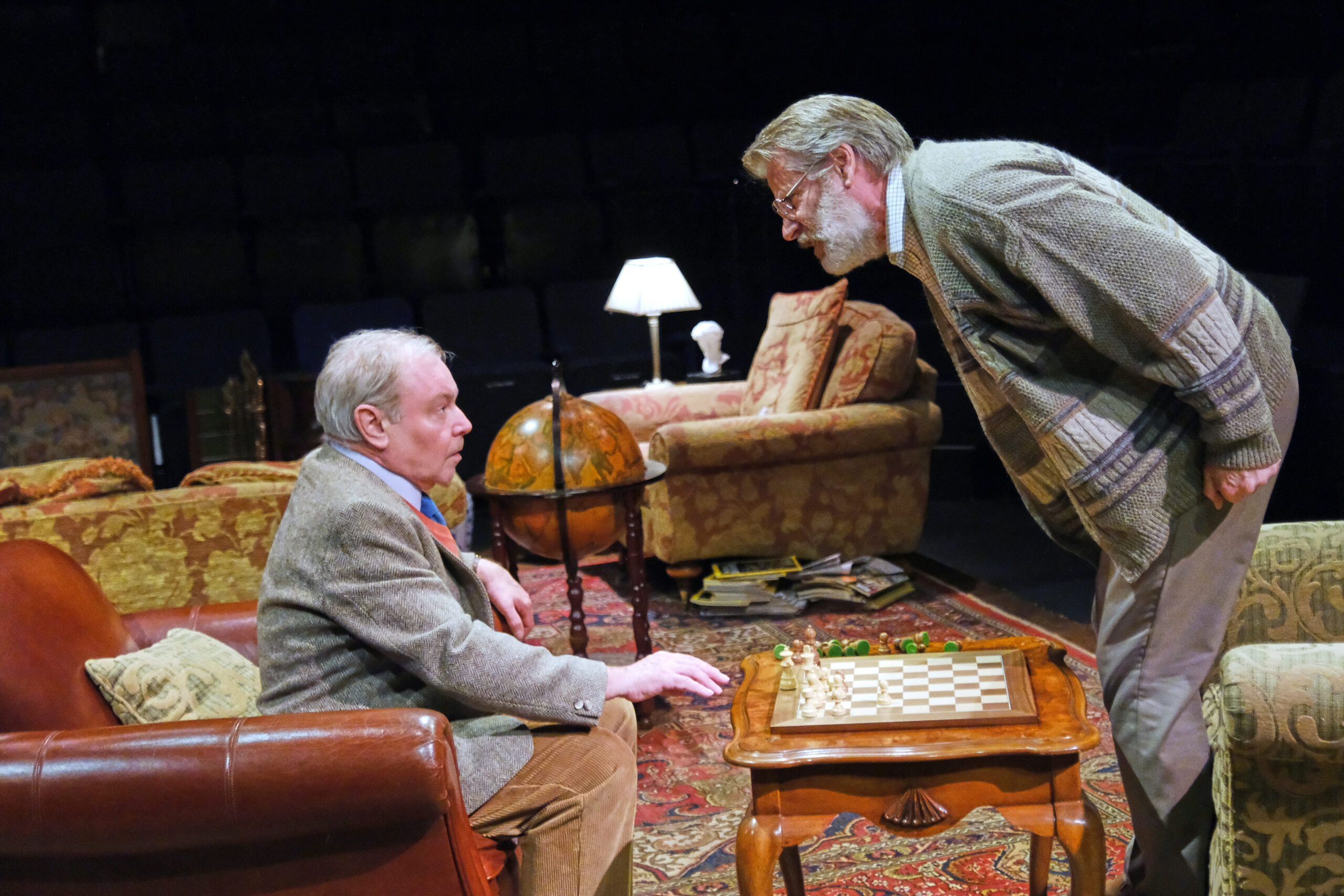
Show and Tell is not a play about dementia, however. It touches – deeply at moments, despite being a comedy – on loneliness and loyalty, imagination and pretence. Above all it indulges with humour and affection Ayckbourn’s long love affair with live theatre, and it does so with aplomb.
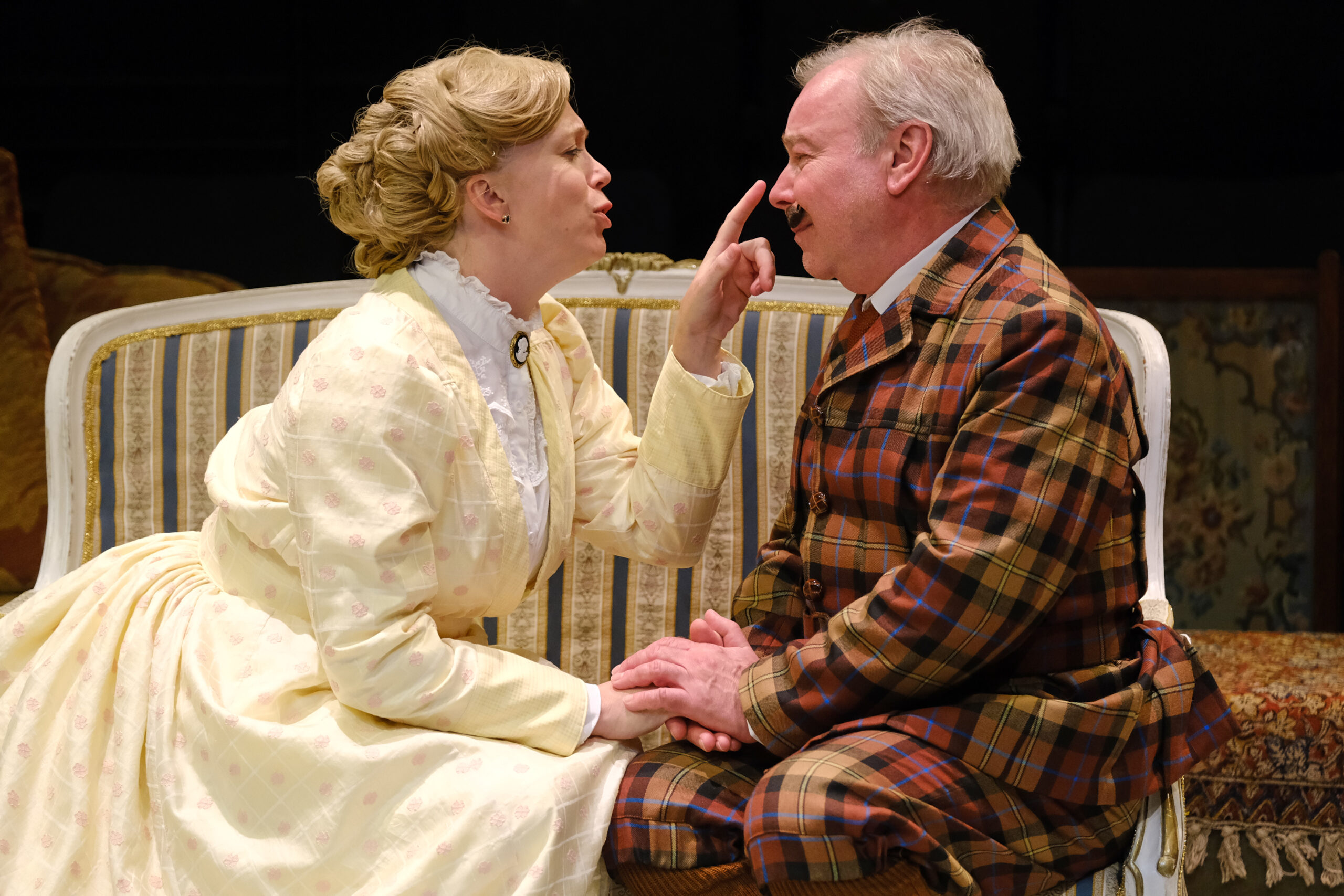
Jack hires struggling HomeLight Theatre Company, specialising in bespoke performances in private homes, to present one-act period farce ‘A Friend Indeed’ as a birthday surprise for Alice.
Managing actor Harry balances her doubts about Jack and the absence of a live audience against the handsome fee Jack is paying. Company member Peter calls it ‘a sprightly comedy’ in his sales pitch, later condemning it as an out-of-touch offence that patronises women.
Ayckbourn, in his mid-eighties and with ninety plays under his belt, is running little risk of himself being patronised as ‘sprightly’. Show and Tell has a dynamic energy and feeling. When Jack’s friend and frustrated thespian Ben is allowed to cover for an actor who cancels, he silently paces the living room with a gleeful anticipation brimming with benevolence.
Untypically, the surprising twists and turns in direction come in the first act. Much of the second is taken up by a performance of the farce. The slower pace is leavened by drawing parallels with the deceits and hypocrisies of the characters in the play-outside-the-play.
Richard Stacey’s Peter and Frances Marshall’s Harry argue engagingly about ‘the moment when actors and audience meet, and magic happens’ – and what happens when the audience is a figment of Jack’s imagination.
Bill Champion plays Jack with bluster and bullying broken by the saddest of silences. In contrast Paul Kemp’s Ben is charmingly diffident, with a subtlety of movement and facial expression that expands slowly as he reveals more and more about himself.
Ayckbourn directs, and his presence is felt everywhere.