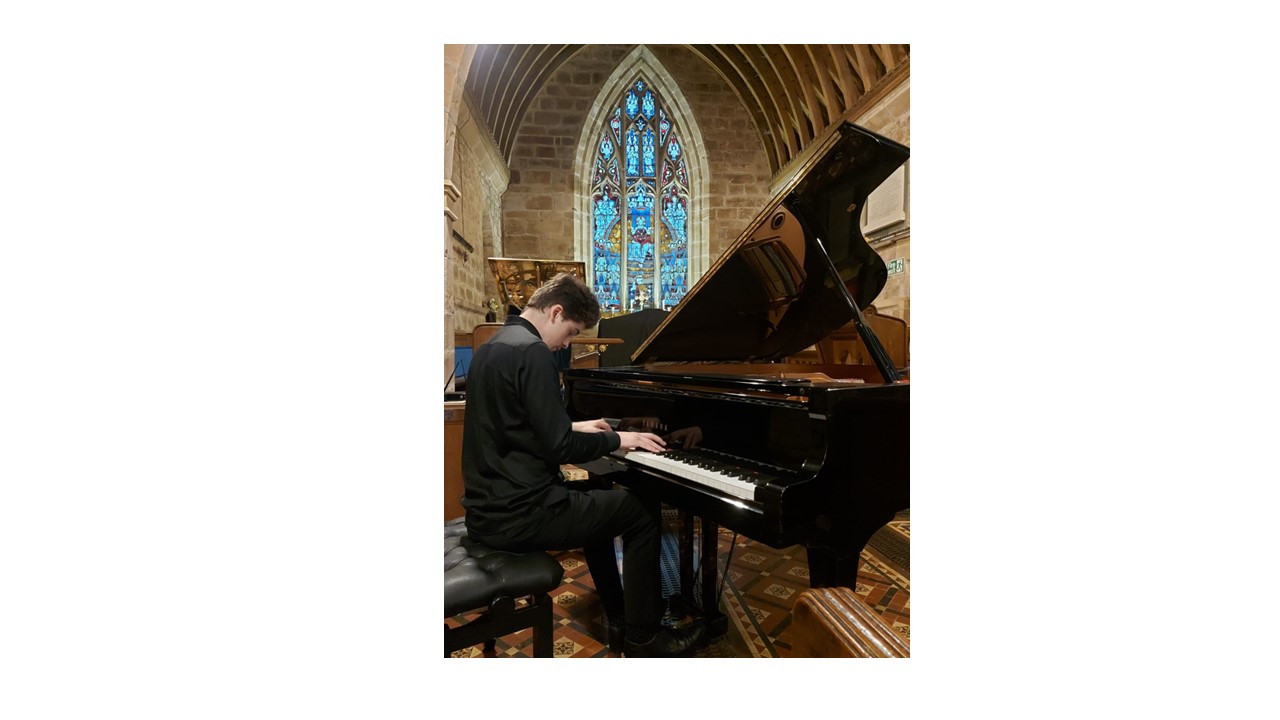
Bringing such a tender touch to the most passionate piano music of Mozart and Schubert, pianist Kyle Hutchings created a sense of intimacy not normally experienced in a six-hundred-year-old church. But the soft sandstone and excellent acoustic of St Michael and All Angels in Adbaston were up to the task: this was a heavenly recital.
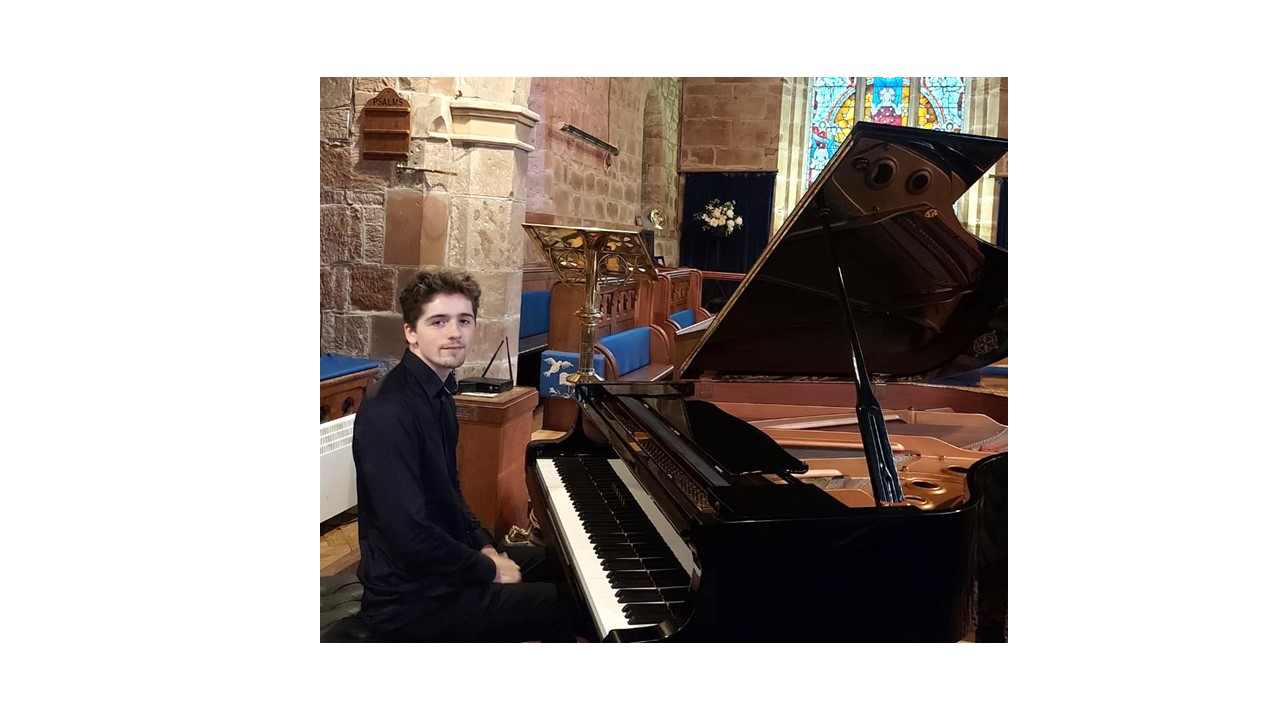
Not from an especially musical family, Kyle’s first experience of classical music came when he was twelve. His grandmother took him to a Paul Lewis concert and he was hooked. For a year Kyle taught himself, “on an upright ex-pub piano bought from a junk shop.” Then Richard Meyrick, who runs the charitable scholarship scheme Pianoman, heard him play Beethoven’s Sonata Pathetique. Formal studies, prestigious prizes, and an international career have followed in short order.
Kyle’s programme in Adbaston opened with Mozart’s Fantasia in C minor and Sonata in C minor, written just a few months apart and originally published as one ‘opus’. Both are dramatic pieces. Spare moments and sombre passages which Kyle delivered with a deep sense of compassion were broken with abrupt, powerful sections which he played with a commanding but equally sympathetic intensity.
Schubert’s Six Moments Musicaux followed in the second half. These short pieces, often described as quixotic, shared with the Mozart both tunefulness and depth of feeling. Kyle’s fingers moved with such deft lightness and sensitivity it seemed he was caressing the keys, and then in contrasting scenes he reminded us forcefully that this was a percussive instrument.
The concert ended with French composer César Franck’s Prelude, Fugue and Variation. Composed eighty years after the Mozart sonata, the piece nevertheless expressed what Kyle called the same “sweet melancholy” and concluded what had become a cohesive, rich, emotional journey.
Kyle has been critically acclaimed as ‘A poet of the piano’ by International Piano Magazine. The great poets whose work was performed in Adbaston were Mozart, Schubert, and Franck. But Kyle Hutchings’ role was to interpret and express that poetry for his audience and he did so superbly, drawing from it every nuance of meaning and emotion. It was a privilege to hear him play.